
Taste Decoded: Deep Reds
Beyond trend stereotypes. Decoding the colors, materials and aesthetics shaping contemporary interior taste, why they emerged and how how they can be interpreted through design.

About This Series
Taste Decoded is a collection of shorter notes exploring the colors, materials and aesthetics shaping contemporary interiors.
Each note looks at when a trend first emerged, why it resonates now, and the key variations through which it can be interpreted and applied in design.
Faster than my usual Travelling Taste articles, this series is made to be saved, shared, and used as a way to read beyond trend stereotypes.
If you are into design and colors, you probably started noticing a big presence of reds tones lately. Especially those dark and deep ones, and no longer used for accents ( like cushions, accessories, etc ) but to fully define surfaces and spaces - that become intense, almost cinematic. A color direction that was clear also while observing the latest Milan Design Week, both in the product offers and in the installation setups.
Beyond the viral moments and aesthetic noise, a strategic analysis of the signals, materials, spatial concepts and cultural shifts shaping the next generation of interiors.
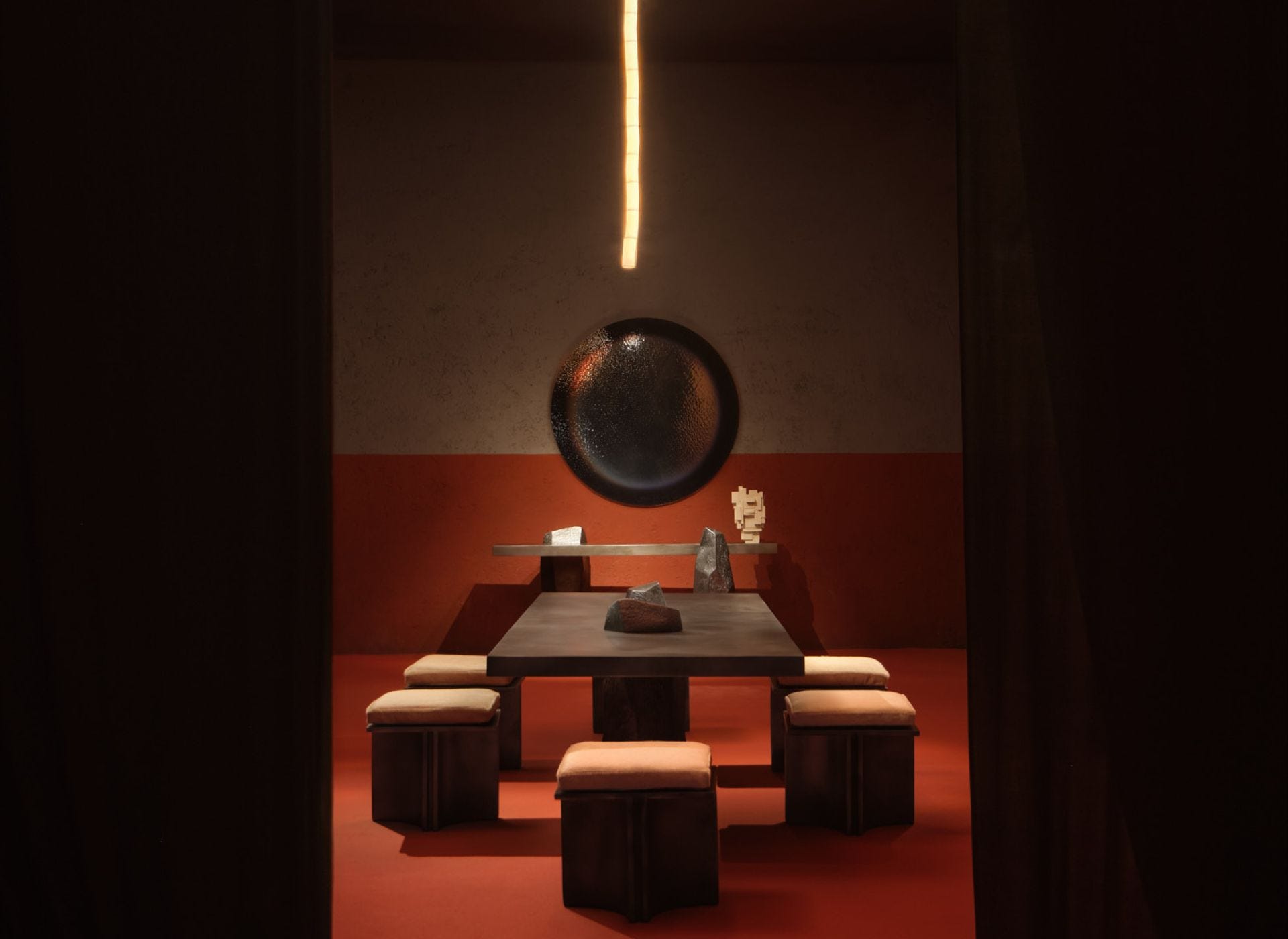
Bright reds behave very differently. These darker tones do not simply demand attention; they build atmosphere. They invite a slower, more immersive experience of space.
This is also why looking at their variations matters: I am sharing some of them below for you to save and get inspired.
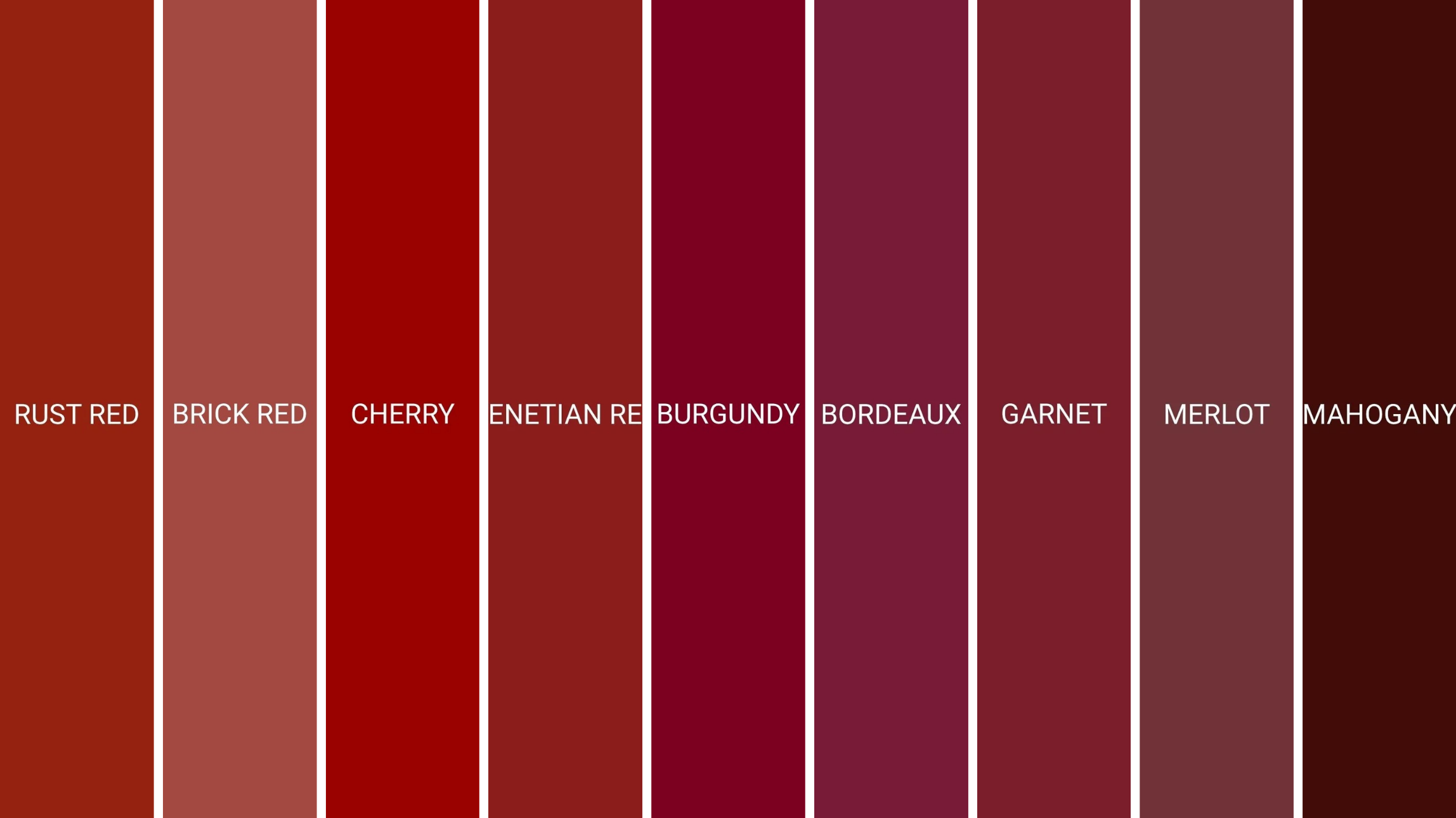
The Variations
Oxblood
The darkest and most mature expression of the color trend. It’s rich, sophisticated and quite dramatic, it pairs naturally with dark woods, leather and smoked glass, and I am sure that now I’ve pinned it, you will start noticing this specific color quite everywhere.


Bordeaux
Elegant and wine-inspired. Often associated with hospitality, dining culture and intimate, atmospheric interiors, its plum undertones give it a relaxed yet chic character, creating spaces that feel intimate rather than dramatic.


Burgundy
The “hit” deep red of the last two years, often mistaken for Bordeaux, which is slightly cooler. Burgundy has a warmer brown undertone, making it one of the most versatile deep reds for interiors: rich, enveloping and easy to translate across walls, textiles, upholstery and furniture finishes.


Merlot
A bit softer and more approachable than Burgundy, it combines red and brown undertones in a way that feels warm, approachable and residential. It brings comfort and richness without the intensity of darker deep reds, making it particularly suited to interiors seeking depth without heaviness.


Garnet
Named after the deep red gemstone, Garnet is one of the most jewel-like variations of the deep red family, and in fact it’s rich and luminous, with a subtle sense of glamour and refinement. Think of it for example paired with metallic finishes, decorative lighting and reflective surfaces.


Brick Red
The most architectural variation, and probably the easiest deep red to adopt for those who usually prefer neutral atmospheres. Rooted in clay, terracotta and natural pigments, it feels grounded, material-driven and less decorative than wine-based reds. It brings warmth and depth while staying close to earth tones.


Mahogany
A red-brown tone that, as the name suggests, is closely connected to heritage woods and timeless craftsmanship. Refined rather than decorative or trend-driven, it brings depth, warmth and a sense of permanence to interiors. It works especially well when the goal is richness without obvious color.


Venetian Red
A color I especially love because of its connection to Venetian artistic tradition. Named after the historic pigment so then associated with Venetian painting and trade, it brings a more mineral and architectural quality to the deep red family.


Rust Red
Another deep red variation that has become particularly visible lately, Rust Red is earthy, oxidized and material-driven. It sits between red, brown and terracotta, making it a natural bridge between deep reds and the growing appetite for warmer, mineral-inspired palettes.


The Early Signals
The early signals were already appearing over three years ago, before deep reds became such a visible interior trend.
One of the biggest misconceptions about trends is that they appear suddenly. In reality, taste moves much more slowly than social media would have us believe. What looks new today is often the visible outcome of years of gradual shifts, experimentation and adoption.
It takes time for a color direction to move from early observation to product development, from product development to the market, and from the market into wider cultural acceptance.
Yet we increasingly confuse trends with hype: what appears in our feeds can feel immediate, even when the underlying preferences have been building for years.
At the time, I was developing a set of broader trend and CMF directions for a client: early observations around taste, lifestyle and visual culture, translated into color, material and finish scenarios.
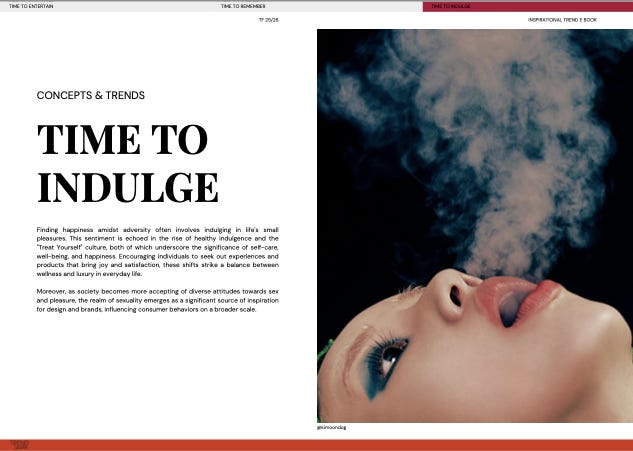
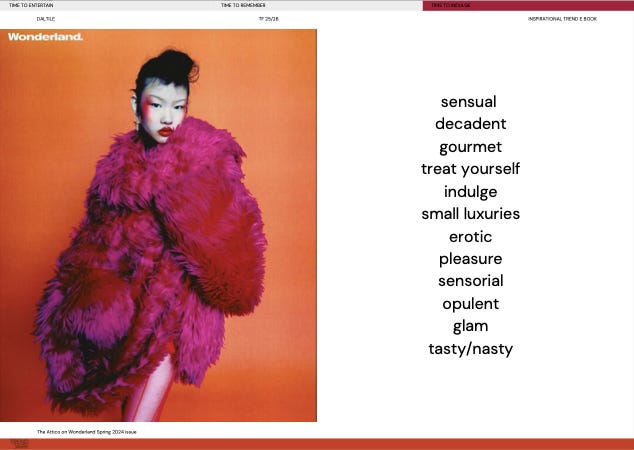
One of these directions I created was named “Time to Indulge” and it explored a more assertive feminine aesthetic, shaped by indulgence, sensuality, emotional depth, pleasure, small luxuries, and the return of glamour in everyday life.
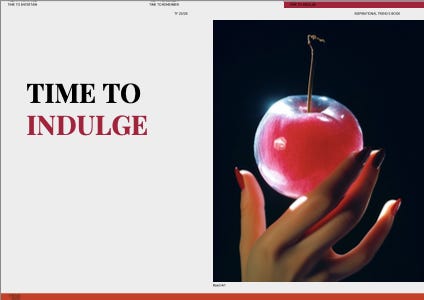
Deep reds were the best color counterpart of that world, of a wider trend story that included glossy finishes, lacquered surfaces, moody hospitality spaces, beauty-inspired codes, collectible objects, gourmet references, rich textures, together with a more decadent approach to materiality. This is definitely something we can observe now, but that was not obvious at all at that time.
This is how taste travels….it fully resonate to me that it would have become a key direction later on and, today, deep reds are one of the clearest interior expressions of that wider shift.
The Shift
The rise of deep reds is not really a story about color, at least, not only.
It is part of a broader shift in taste that has been across interiors, hospitality, beauty and visual culture for several years now, a growing desire for experiences that feel richer, more emotional and more sensorial.
We could keep exploring the “why” endlessly, connecting it to cultural moods, lifestyle changes and wider aesthetic movements. But I never want trend research to remain too abstract or too macro. I am still an architect, and what interests me most is how these wider shifts can be translated into real spaces, real materials and real design decisions, for spaces that resonate with the people who live, work or gather in them.
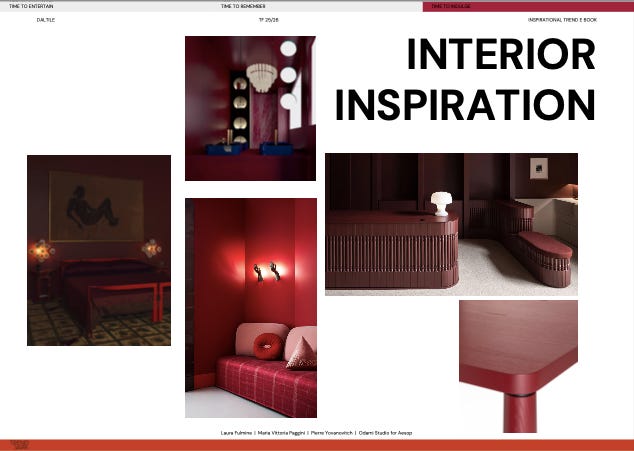
This is why deep reds are interesting to me not as a single color trend, but as a visual territory. They sit somewhere between indulgence and sophistication, glamour and intimacy, pleasure and permanence.
Bright reds behave very differently. These darker tones do not simply demand attention; they build atmosphere. They invite a slower, more immersive experience of space.
This is also why looking at their variations matters: I am sharing some of them below for you to save and get inspired.
A note from me
If you enjoyed this note, this is the kind of lens I bring to all my trend work: reading early signals before they become obvious, understanding why they resonate, and translating them into real design choices.
It is also the approach I use in my consulting work with brands across materials, furniture and interiors for architecture.
Inside TRENDBARK Studio, I share early signals and practical applications, but also my own approach to trend forecasting with forward-looking professionals and brands who want to read beyond the surface and make more meaningful design decisions. More information here.